

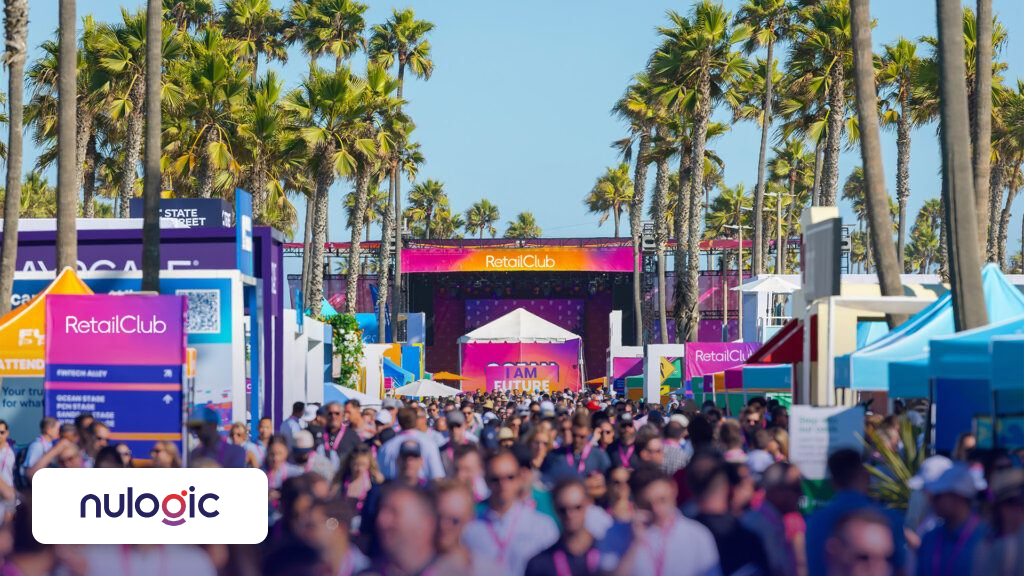
RetailClub AI Festival 2026
RetailClub AI Festival took over an open-air boardwalk in Huntington Beach for three days. Built entirely around AI in retail by the founders of Shoptalk and Groceryshop, it felt less like a trade show and more like a working session for the industry.
A different kind of setting
An all-outdoor venue on the beach brought a different energy to the conversations and made it easy to step away from the usual conference routine.
Conversations over pitches
Curated 1:1 Breakthru meetings and roundtables made room for focused discussion of business challenges, priorities, and potential partnerships.
AI grounded in reality
The talk went beyond hype to where retailers are seeing impact, from agentic commerce and supply chain efficiency to personalization and scaling AI.
Key takeaways from RetailClub AI Festival 2026
Seven things we came away thinking differently about, drawn from our conversations on the boardwalk, the festival programme, and commentary from other attendees since. Where a data point comes from outside the festival, we say so.
The homepage is no longer the front door, and there is no single new one
RetailClub built its selling track around a blunt question: how do retailers win attention when the homepage is no longer the front door? The programme answered with debate rather than consensus, from whether the brand website survives agentic commerce to whether brand-owned agents will become the main customer interface.
Scot Wingo, who spoke at the festival, now sorts AI-led shopping into four surfaces: answer engines, retailer agents such as Amazon's and Walmart's, personal agents, and a brand's own site and on-site agent. Which of them wins is still an open argument, while NIQ reports that a majority of U.S. consumers already use AI to shop.
Stop planning for one new channel. Assume shoppers will start in several places you do not control, and decide what has to be true on each: how your products are represented, what an agent can do on your behalf, and what happens when the shopper arrives.
Every brand here is trying to figure out how to navigate the new front end of retail.Michael Relich, Advisory Board Member, NULogic
Discovery is moving into AI faster than the sale is
Walmart put about 200,000 products into ChatGPT's Instant Checkout, then reported that purchases completed inside the chat converted at a third of the rate of shoppers sent on to its own site. OpenAI has since shifted toward retailer apps, and Walmart now runs a Sparky-powered app in ChatGPT where shoppers link accounts and loyalty and check out on Walmart's own payment systems.
The festival programme reflected the same tension, including an AWS and Stripe session on why shorter AI-led decision journeys make checkout more important, not less. Retailgentic's post-festival update adds a practical limit: agents that can buy only one item at a time still cap how autonomous shopping can get.
Treat agents as a source of demand, and put the investment where the sale is won: account linking, loyalty, cart, payment, and a hand-off that does not lose the shopper's context.
Lower conversion for purchases completed inside ChatGPT than for shoppers sent to Walmart's own site.
Outside the festival: Walmart, as reported by CNBC and Axios, March 2026.
The catalog is now a living product, and how you appear matters as much as whether you do
Catalog readiness was the most practical thread in the programme. It ran through a roundtable on catalog readiness and agent discovery, a working session on building an agentic commerce optimization team, and a coffee break on getting data AI-ready that pushed back on the idea that data has to be perfect first. A session called The Parrot Problem made the sharper point: AI does not just answer questions about a brand, it editorializes.
Wingo's update lands in the same place. A catalog that used to be largely static now has to be refreshed regularly and published in different forms for crawlers, answer engines, marketplaces and on-site agents, so one investment lifts every surface.
Give the catalog an owner and a refresh cadence, and measure how accurately products and the brand are described across AI surfaces, not only whether they appear.
Our Data & AI and integration teams connect product, content and inventory data so every surface draws from the same source.
Most retailers have deployed AI, and few can show what it earned
The gap between pilot and profit was the most repeated framing of the week. Merkle's research on more than 100 billion-dollar enterprises, featured in a festival session led by Holden Bale, found that 88% have deployed AI while only 6% can tie it directly to EBITDA. Gartner has forecast that more than 40% of agentic AI projects will be canceled by the end of 2027 over cost, unclear value or weak risk controls.
Sessions took on the economics head-on, from From Pilot to P&L to a share group on cost-cutting myths and a roundtable on rising AI run costs. The Women2Watch Retail AI Pulse Report, launched at the festival, argues for measuring readiness rather than adoption and building operating models instead of pilots.
Replace "how many pilots" with "what changed in the P&L." Budget for run costs and risk controls at the start, because those are what tend to end projects.
Merkle research, featured in a RetailClub AI Festival session.
The nearest returns sit at the front line, with people still in the loop
Beneath the headline themes of augmenting the merchant, the intelligent supply chain and the AI-enabled store, the most concrete sessions were about diagnosis and decisions rather than chat. Helzberg and Zipline described using AI to find out why a store underperforms, not just which one. Psycho Bunny, with Intelo and Fluent Commerce, showed agents handling replenishment and merchandising on live inventory and order data.
A pricing and promotions session named governance and humans in the loop as what gets agentic AI into the P&L, and a store-floor share group asked which in-store uses have scaled and which proved too costly. Michael Relich took up the same idea from the leadership seat, in his talk on moving AI to the edge of retail to improve decisions.
Start with decisions that are frequent, measurable and already made by someone with context, and design where the human confirms. That is where trust builds fastest.
Nerve is built for this: agents that sense across store, inventory and order systems and act across departments.
Trust is turning into infrastructure
As agents research, compare and buy, questions that used to sit in security and QA footnotes moved onto the main programme. Ping Identity framed agent-driven shopping as a fifth channel and asked how a retailer verifies a machine. A roundtable covered fraud and automated abuse aimed at AI-driven experiences, and ServiceNow and Splunk sessions dealt with securing and observing agents in production.
A Conviva session put the quality problem plainly: an agent can pass every evaluation you have built and the shopper can still leave. The Retail AI Pulse Report reaches the same conclusion from the workforce side, naming trust as infrastructure.
Budget for agent identity, monitoring and outcome measurement as part of the launch, not as a follow-up. Quality that shows up only in evals is not the same as a shopper who completes the purchase.
Argos covers testing, monitoring and quality assurance for agent-driven commerce.
Three questions agentic commerce raises
- Who is this agent?And is it allowed to act on the shopper's behalf
- What did it do?And can we see it, in production, in real time
- Did the shopper get what they needed?Measured by outcomes, not only evals
Conversations beat pitches, especially on a beach
The format was itself a signal. RetailClub pairs its stage programme with pre-scheduled, double opt-in Breakthru meetings, small roundtables and expert-led share groups capped at 30 people, and says it selects speakers on merit rather than sponsorship. Watson Live, one of the boardwalk sessions, ran on a simple premise: three hot topics, two sides, one vote.
Set that beside the programme and a pattern shows. The questions people wanted to work through in small groups, such as whether the brand website survives, which AI vendors have real defensibility, and where cost-cutting expectations break down, are the ones a slide deck cannot settle.
If leaders are asking for debate and working sessions over presentations, vendors and agencies should arrive with problems to pressure-test and evidence to share, not a pitch.
Our Agentic Commerce Discovery work starts from the same place, with the business problem first and the technology second.
Sources and further reading
Session descriptions come from the published festival programme. Figures from outside the festival are attributed to their original sources.
- RetailClub AI Festival agenda and themes
- RetailClub Breakthru Experiences and session descriptions
- Retailgentic, State of Agentic Commerce Update: End of Q3 (Scot Wingo, September 29, 2026)
- The Consumer Collective, A Human-First Approach Will Help Make Retail AI Investments Worth It (Retail AI Pulse Report)
- CNBC, OpenAI's first crack at online shopping stumbled (March 2026)
- Axios, Retailers split on AI checkout options amid mixed results (March 2026)
- Gartner forecast on agentic AI project cancellations (June 2025)
- Merkle research on enterprise AI deployment and EBITDA impact, as listed in the festival programme
The best conversations in Huntington Beach started with a business problem, not a technology.
Across three days, the ideas that held up were the ones tied to a decision, a cost or a customer. That is the test we are taking back to our own work.How these themes map to what we build
Our four products each stand alone. Together they cover the layers this year's conversations kept returning to.
Penumbra
Monitors, measures, and improves how ChatGPT, Gemini, Perplexity, and Grok describe and cite your brand.
Cartivo
A full shopping agent that handles search, compare, cart, and checkout in one conversation.
Nerve
A retail-native, multi-agent AI platform that senses across your systems and executes across departments.
Argos
Continuous watch over the stack, with testing, monitoring, and quality assurance for agent-driven commerce.
NULogic at RetailClub AI Festival
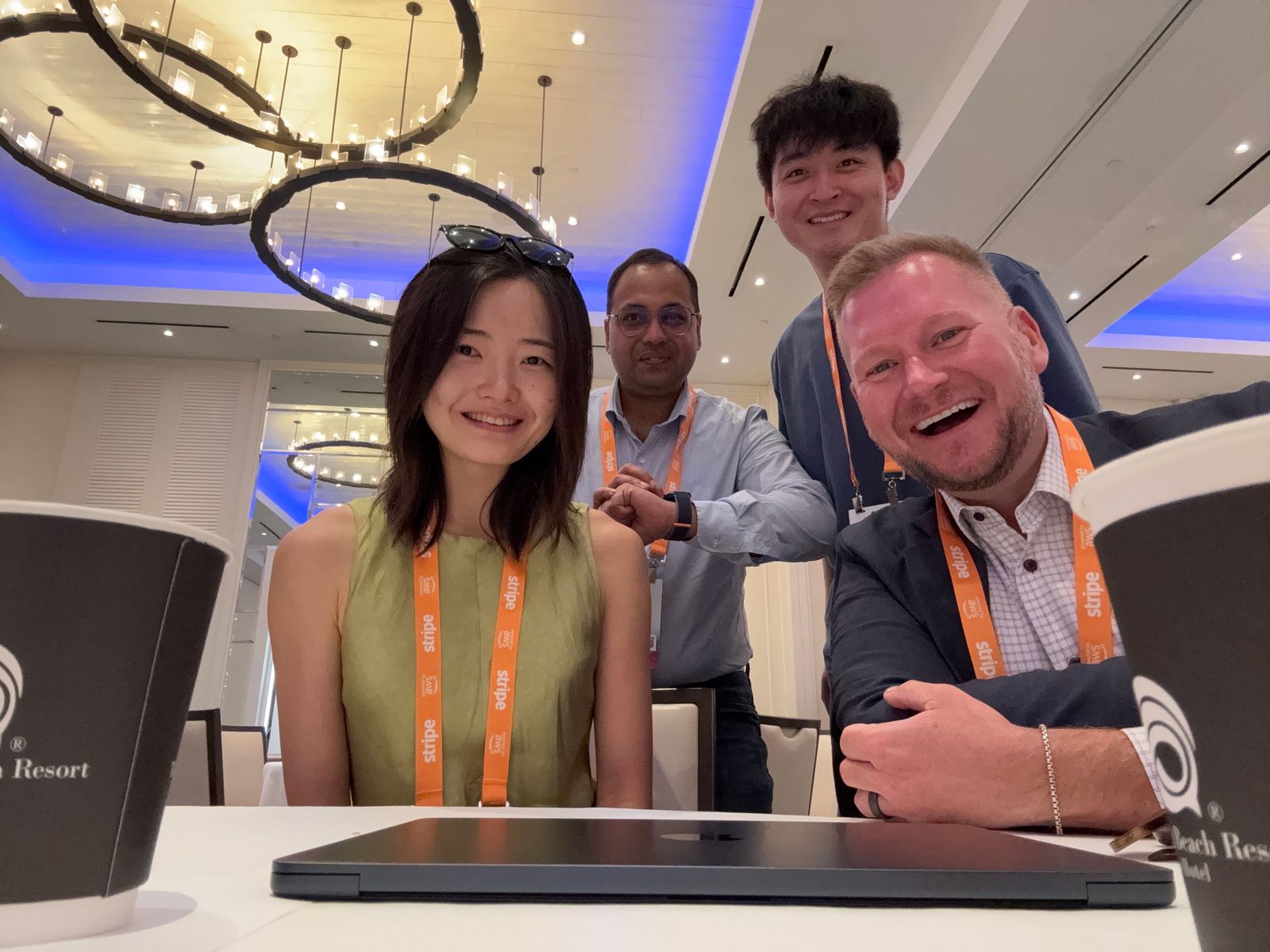
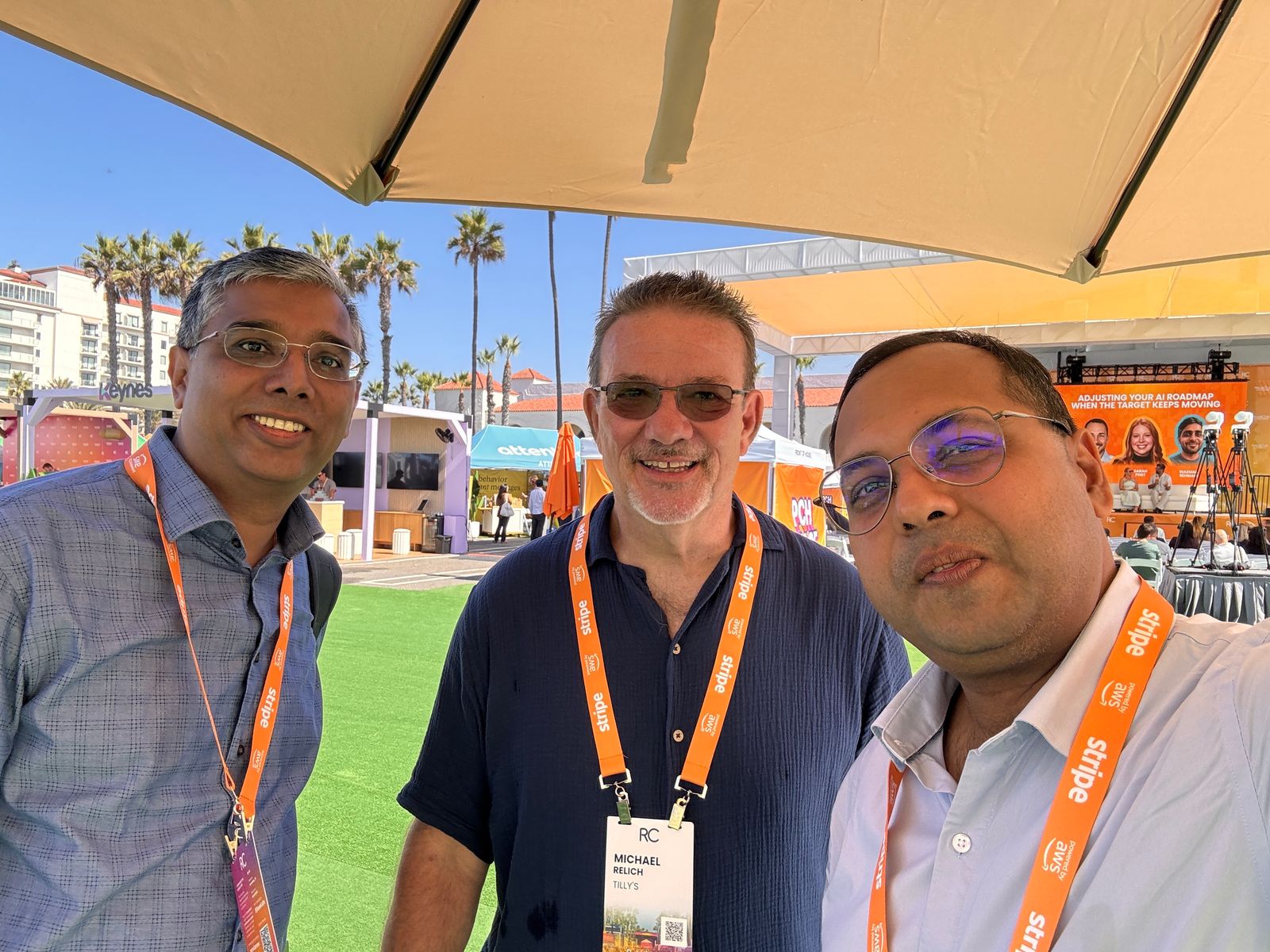
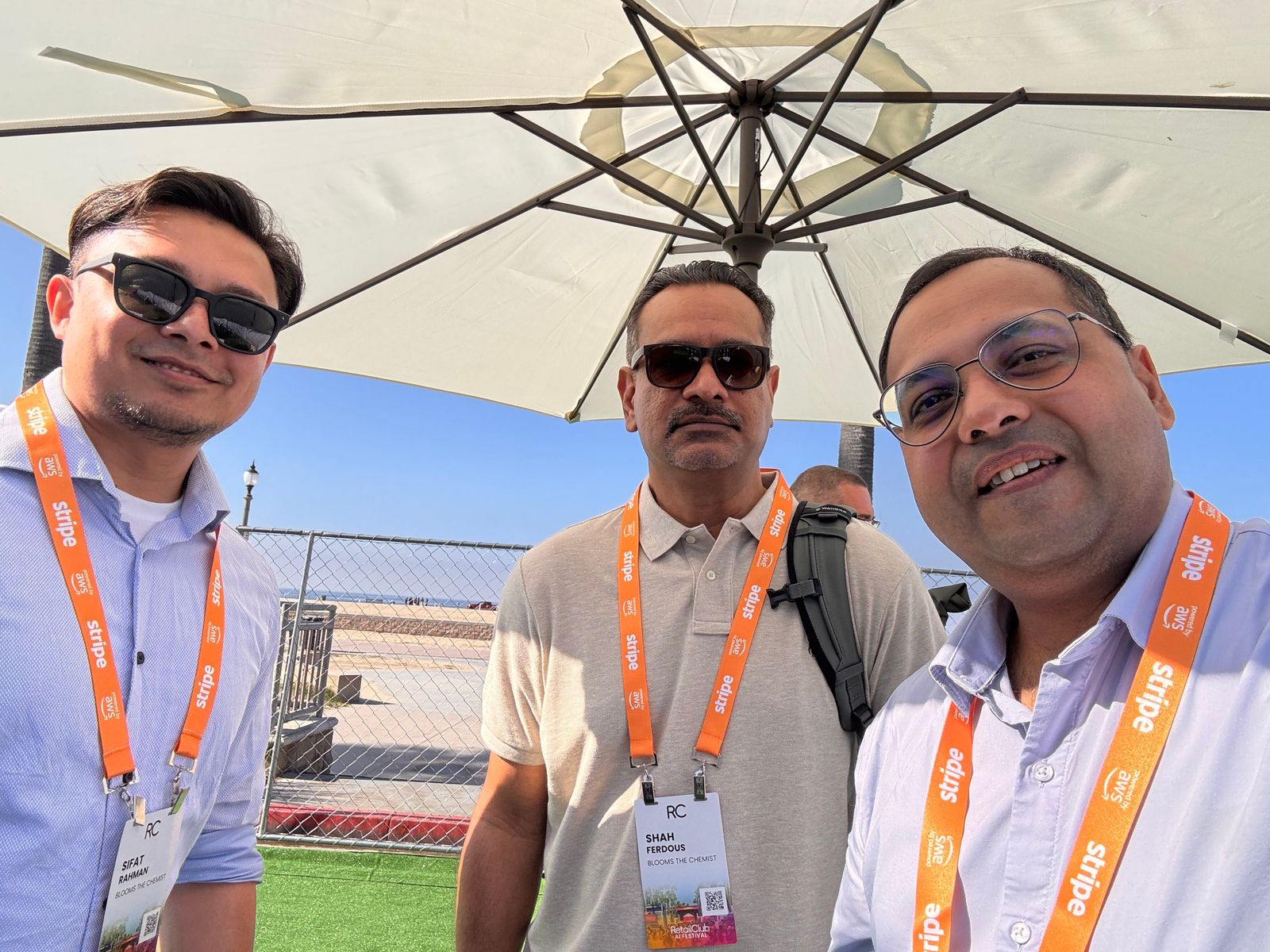
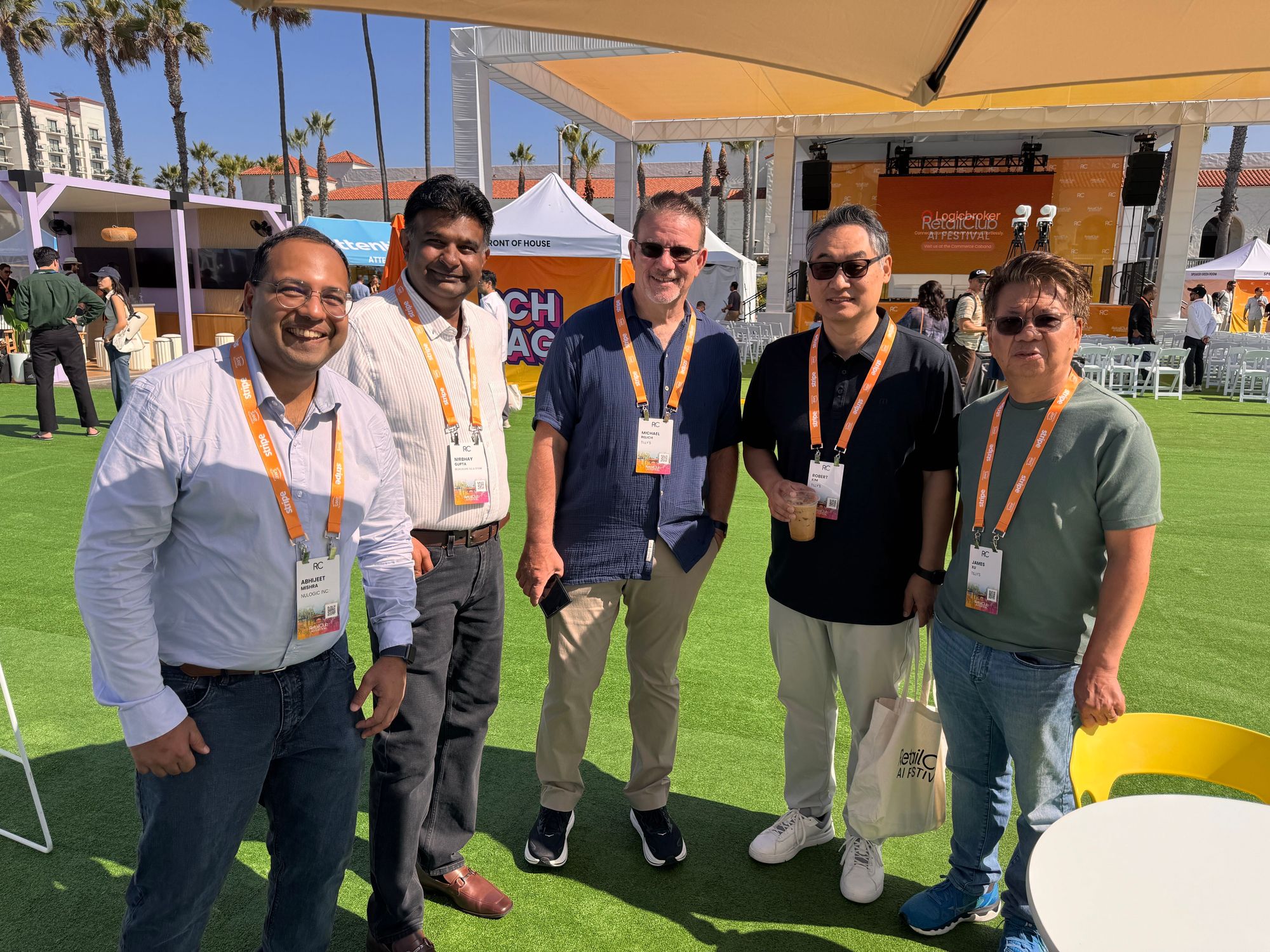
Abhijeet Mishra and Advisory Board Member Michael Relich spent the three days in conversation with retail and commerce leaders, partners, and investors. The exchanges reinforced how much of AI's value comes down to fundamentals, and how ready leaders are to talk about them plainly.
What we kept hearing
- Brands are working out how to navigate the new front end of retail, and personalization is part of that answer.
- Investors see a fast-expanding market, and many expect the largest platforms to absorb the best ideas.
- Preparing data for AI is a bigger job than most brands and data providers have planned for.
- The people who sell and serve customers should get more of the AI attention than they do today.
Our people in Huntington Beach

Abhijeet Mishra
Spent the festival in one-on-one and small-group conversations with retail and brand leaders about agentic commerce and where AI is delivering results.
Connect on LinkedIn
Michael Relich
A retail and e-commerce executive with decades of C-level experience, including roles at PacSun, Lucky Brand, Crate & Barrel, Guess, and Wet Seal. Shared a talk on moving AI to the edge of retail.
Connect on LinkedInThank you to the RetailClub team and everyone we met in Huntington Beach. It was great to connect, exchange ideas, and continue the conversation about what is next for retail and digital commerce.
Let's talk about what's next
If agentic commerce, data readiness, or AI for your store and field teams are on your roadmap, we would be glad to compare notes.
What you will learn
Join us for an insightful webinar on the latest web technologies and trends!


Reserve your spot
RetailClub AI Festival 2026


RetailClub AI Festival 2026
We spent three days in Huntington Beach talking with retailers, brand leaders, partners, and investors about where AI is creating real business impact. Here is what stood out, and what it means for teams building what comes next.
RetailClub AI Festival took over an open-air boardwalk in Huntington Beach for three days. Built entirely around AI in retail by the founders of Shoptalk and Groceryshop, it felt less like a trade show and more like a working session for the industry.
A different kind of setting
An all-outdoor venue on the beach brought a different energy to the conversations and made it easy to step away from the usual conference routine.
Conversations over pitches
Curated 1:1 Breakthru meetings and roundtables made room for focused discussion of business challenges, priorities, and potential partnerships.
AI grounded in reality
The talk went beyond hype to where retailers are seeing impact, from agentic commerce and supply chain efficiency to personalization and scaling AI.
Key takeaways from RetailClub AI Festival 2026
Seven things we came away thinking differently about, drawn from our conversations on the boardwalk, the festival programme, and commentary from other attendees since. Where a data point comes from outside the festival, we say so.
The homepage is no longer the front door, and there is no single new one
RetailClub built its selling track around a blunt question: how do retailers win attention when the homepage is no longer the front door? The programme answered with debate rather than consensus, from whether the brand website survives agentic commerce to whether brand-owned agents will become the main customer interface.
Scot Wingo, who spoke at the festival, now sorts AI-led shopping into four surfaces: answer engines, retailer agents such as Amazon's and Walmart's, personal agents, and a brand's own site and on-site agent. Which of them wins is still an open argument, while NIQ reports that a majority of U.S. consumers already use AI to shop.
Stop planning for one new channel. Assume shoppers will start in several places you do not control, and decide what has to be true on each: how your products are represented, what an agent can do on your behalf, and what happens when the shopper arrives.
Every brand here is trying to figure out how to navigate the new front end of retail.Michael Relich, Advisory Board Member, NULogic
Discovery is moving into AI faster than the sale is
Walmart put about 200,000 products into ChatGPT's Instant Checkout, then reported that purchases completed inside the chat converted at a third of the rate of shoppers sent on to its own site. OpenAI has since shifted toward retailer apps, and Walmart now runs a Sparky-powered app in ChatGPT where shoppers link accounts and loyalty and check out on Walmart's own payment systems.
The festival programme reflected the same tension, including an AWS and Stripe session on why shorter AI-led decision journeys make checkout more important, not less. Retailgentic's post-festival update adds a practical limit: agents that can buy only one item at a time still cap how autonomous shopping can get.
Treat agents as a source of demand, and put the investment where the sale is won: account linking, loyalty, cart, payment, and a hand-off that does not lose the shopper's context.
Lower conversion for purchases completed inside ChatGPT than for shoppers sent to Walmart's own site.
Outside the festival: Walmart, as reported by CNBC and Axios, March 2026.
The catalog is now a living product, and how you appear matters as much as whether you do
Catalog readiness was the most practical thread in the programme. It ran through a roundtable on catalog readiness and agent discovery, a working session on building an agentic commerce optimization team, and a coffee break on getting data AI-ready that pushed back on the idea that data has to be perfect first. A session called The Parrot Problem made the sharper point: AI does not just answer questions about a brand, it editorializes.
Wingo's update lands in the same place. A catalog that used to be largely static now has to be refreshed regularly and published in different forms for crawlers, answer engines, marketplaces and on-site agents, so one investment lifts every surface.
Give the catalog an owner and a refresh cadence, and measure how accurately products and the brand are described across AI surfaces, not only whether they appear.
Our Data & AI and integration teams connect product, content and inventory data so every surface draws from the same source.
Most retailers have deployed AI, and few can show what it earned
The gap between pilot and profit was the most repeated framing of the week. Merkle's research on more than 100 billion-dollar enterprises, featured in a festival session led by Holden Bale, found that 88% have deployed AI while only 6% can tie it directly to EBITDA. Gartner has forecast that more than 40% of agentic AI projects will be canceled by the end of 2027 over cost, unclear value or weak risk controls.
Sessions took on the economics head-on, from From Pilot to P&L to a share group on cost-cutting myths and a roundtable on rising AI run costs. The Women2Watch Retail AI Pulse Report, launched at the festival, argues for measuring readiness rather than adoption and building operating models instead of pilots.
Replace "how many pilots" with "what changed in the P&L." Budget for run costs and risk controls at the start, because those are what tend to end projects.
Merkle research, featured in a RetailClub AI Festival session.
The nearest returns sit at the front line, with people still in the loop
Beneath the headline themes of augmenting the merchant, the intelligent supply chain and the AI-enabled store, the most concrete sessions were about diagnosis and decisions rather than chat. Helzberg and Zipline described using AI to find out why a store underperforms, not just which one. Psycho Bunny, with Intelo and Fluent Commerce, showed agents handling replenishment and merchandising on live inventory and order data.
A pricing and promotions session named governance and humans in the loop as what gets agentic AI into the P&L, and a store-floor share group asked which in-store uses have scaled and which proved too costly. Michael Relich took up the same idea from the leadership seat, in his talk on moving AI to the edge of retail to improve decisions.
Start with decisions that are frequent, measurable and already made by someone with context, and design where the human confirms. That is where trust builds fastest.
Nerve is built for this: agents that sense across store, inventory and order systems and act across departments.
Trust is turning into infrastructure
As agents research, compare and buy, questions that used to sit in security and QA footnotes moved onto the main programme. Ping Identity framed agent-driven shopping as a fifth channel and asked how a retailer verifies a machine. A roundtable covered fraud and automated abuse aimed at AI-driven experiences, and ServiceNow and Splunk sessions dealt with securing and observing agents in production.
A Conviva session put the quality problem plainly: an agent can pass every evaluation you have built and the shopper can still leave. The Retail AI Pulse Report reaches the same conclusion from the workforce side, naming trust as infrastructure.
Budget for agent identity, monitoring and outcome measurement as part of the launch, not as a follow-up. Quality that shows up only in evals is not the same as a shopper who completes the purchase.
Argos covers testing, monitoring and quality assurance for agent-driven commerce.
Three questions agentic commerce raises
- Who is this agent?And is it allowed to act on the shopper's behalf
- What did it do?And can we see it, in production, in real time
- Did the shopper get what they needed?Measured by outcomes, not only evals
Conversations beat pitches, especially on a beach
The format was itself a signal. RetailClub pairs its stage programme with pre-scheduled, double opt-in Breakthru meetings, small roundtables and expert-led share groups capped at 30 people, and says it selects speakers on merit rather than sponsorship. Watson Live, one of the boardwalk sessions, ran on a simple premise: three hot topics, two sides, one vote.
Set that beside the programme and a pattern shows. The questions people wanted to work through in small groups, such as whether the brand website survives, which AI vendors have real defensibility, and where cost-cutting expectations break down, are the ones a slide deck cannot settle.
If leaders are asking for debate and working sessions over presentations, vendors and agencies should arrive with problems to pressure-test and evidence to share, not a pitch.
Our Agentic Commerce Discovery work starts from the same place, with the business problem first and the technology second.
Sources and further reading
Session descriptions come from the published festival programme. Figures from outside the festival are attributed to their original sources.
- RetailClub AI Festival agenda and themes
- RetailClub Breakthru Experiences and session descriptions
- Retailgentic, State of Agentic Commerce Update: End of Q3 (Scot Wingo, September 29, 2026)
- The Consumer Collective, A Human-First Approach Will Help Make Retail AI Investments Worth It (Retail AI Pulse Report)
- CNBC, OpenAI's first crack at online shopping stumbled (March 2026)
- Axios, Retailers split on AI checkout options amid mixed results (March 2026)
- Gartner forecast on agentic AI project cancellations (June 2025)
- Merkle research on enterprise AI deployment and EBITDA impact, as listed in the festival programme
The best conversations in Huntington Beach started with a business problem, not a technology.
Across three days, the ideas that held up were the ones tied to a decision, a cost or a customer. That is the test we are taking back to our own work.How these themes map to what we build
Our four products each stand alone. Together they cover the layers this year's conversations kept returning to.
Penumbra
Monitors, measures, and improves how ChatGPT, Gemini, Perplexity, and Grok describe and cite your brand.
Cartivo
A full shopping agent that handles search, compare, cart, and checkout in one conversation.
Nerve
A retail-native, multi-agent AI platform that senses across your systems and executes across departments.
Argos
Continuous watch over the stack, with testing, monitoring, and quality assurance for agent-driven commerce.
NULogic at RetailClub AI Festival
Abhijeet Mishra and Advisory Board Member Michael Relich spent the three days in conversation with retail and commerce leaders, partners, and investors. The exchanges reinforced how much of AI's value comes down to fundamentals, and how ready leaders are to talk about them plainly.
What we kept hearing
- Brands are working out how to navigate the new front end of retail, and personalization is part of that answer.
- Investors see a fast-expanding market, and many expect the largest platforms to absorb the best ideas.
- Preparing data for AI is a bigger job than most brands and data providers have planned for.
- The people who sell and serve customers should get more of the AI attention than they do today.
Our people in Huntington Beach
Abhijeet Mishra
Spent the festival in one-on-one and small-group conversations with retail and brand leaders about agentic commerce and where AI is delivering results.
Connect on LinkedInMichael Relich
A retail and e-commerce executive with decades of C-level experience, including roles at PacSun, Lucky Brand, Crate & Barrel, Guess, and Wet Seal. Shared a talk on moving AI to the edge of retail.
Connect on LinkedInThank you to the RetailClub team and everyone we met in Huntington Beach. It was great to connect, exchange ideas, and continue the conversation about what is next for retail and digital commerce.
Let's talk about what's next
If agentic commerce, data readiness, or AI for your store and field teams are on your roadmap, we would be glad to compare notes.